By Liset Luque, Human rights activist and President of Alianza por Venezuela


On September 4, Argentina commemorated Immigrant Day, a date that for the past several years has invited me to pause and look back. Like millions of people around the world, one day I had to leave my country, Venezuela, with a suitcase filled with uncertainty but also with hope. In 2018, I arrived in Argentina with my children, my certified degree, and the dream of building a future. At first, I received solidarity; later, I decided to give it back. Today, I have the honor of leading Alianza por Venezuela, an organization created by and for migrants that supports, integrates, and uplifts our community.

To speak of migration is to speak of humanity. According to the United Nations, more than 304 million people live outside their country of birth, and 123 million have been forcibly displaced. Within this context, the Venezuelan diaspora is the largest and most recent in Latin America: more than 8 million worldwide, with hundreds of thousands finding a home in Argentina. We are already the third-largest migrant community in the country, and through our work, culture, and resilience, we are beginning to leave a mark.

Through Alianza por Venezuela, we have supported more than 100,000 people in Argentina over the past eight years. We created the Centro Venezolano Argentino, where culture and integration come alive each day through educational, artistic, and social activities. Our focus is on opening pathways: parents who manage to validate their professional degrees; entrepreneurs who move from migrant fairs to opening their own businesses; children who find a safe space to grow; and older adults who rebuild social ties through digital inclusion or theater. This is integration in motion.

Over the years, we have cultivated a perspective that goes beyond stories of migration grief — a perspective that invites us to also see migration as a driver of innovation. From talks to festivals, there is a network of key actors who contribute to making integration possible. A fundamental actor in this process has been the Hello Accelerator, an initiative led by Ashoka and IKEA Social Entrepreneurship, which seeks to connect efforts, break silos, and accelerate the migration ecosystem in both Latin America and Europe. This experience, which brings together people from different countries and sectors to co-create collaborative and systemic solutions for the socioeconomic integration of migrants and refugees, allowed us to strengthen our vision, share learnings, and connect with other experiences of migrant leadership in the region. Thanks to these spaces, we understand that migrants are not only striving to survive: we bring solutions, creativity, and future to the societies that welcome us.

Migration should invite us to imagine countries as a shared home, where every person, regardless of origin, can contribute and grow. At Alianza por Venezuela, we see it in the doctor who validates his degree and returns to work in a hospital; in the entrepreneur who opens a business and generates jobs in her city; in the children who find safe spaces to dream in schools; in the artists who create and enrich culture; and in the elderly who, even far from their homeland, recover connections and community participation.

Today, at a time when xenophobic discourses are resurfacing, it is urgent to remember that the history of Argentina —and of any country— becomes greater when it opens its arms and diminishes when it closes itself in prejudice. Migration is not fleeing: it is the brave decision to choose life and a future.

The challenge ahead is not asking why we should welcome migrants, but how we can strengthen together this transformative energy. Because every migrant story is an investment of courage, talent, and creativity in the country that opens its doors. To bet on more open, inclusive, and supportive societies is, ultimately, to bet on a better future for all.

lizet

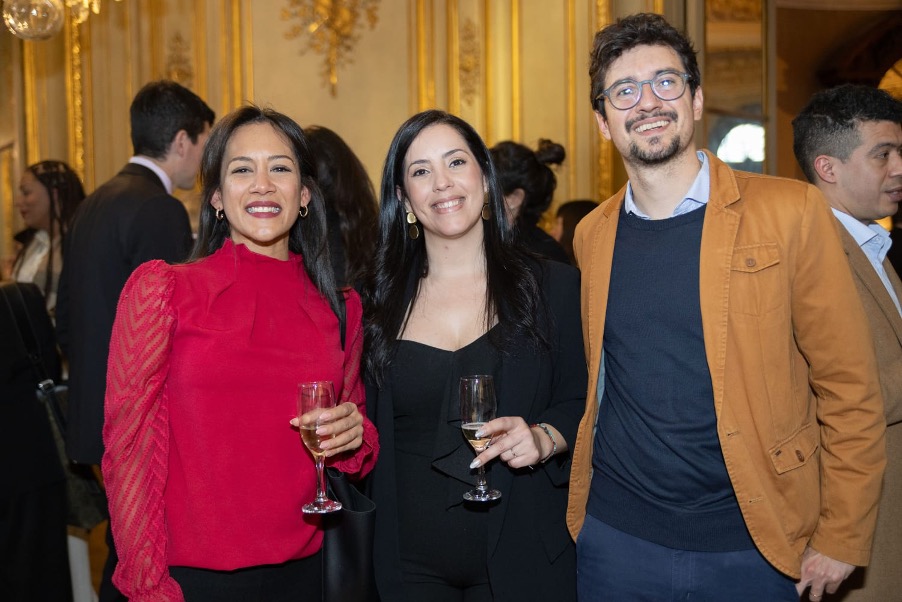
Liset Luque (center), President of Alianza por Venezuela, during the Immigrant Day event in Argentina