Stories of social innovators who are transforming the way we talk about migration.
If we understand migrants as agents of change seeking an opportunity to improve their reality and that of many others, we can hack the narrative. Therefore, we have gathered four stories of migrants who transformed their reality through social innovation initiatives.
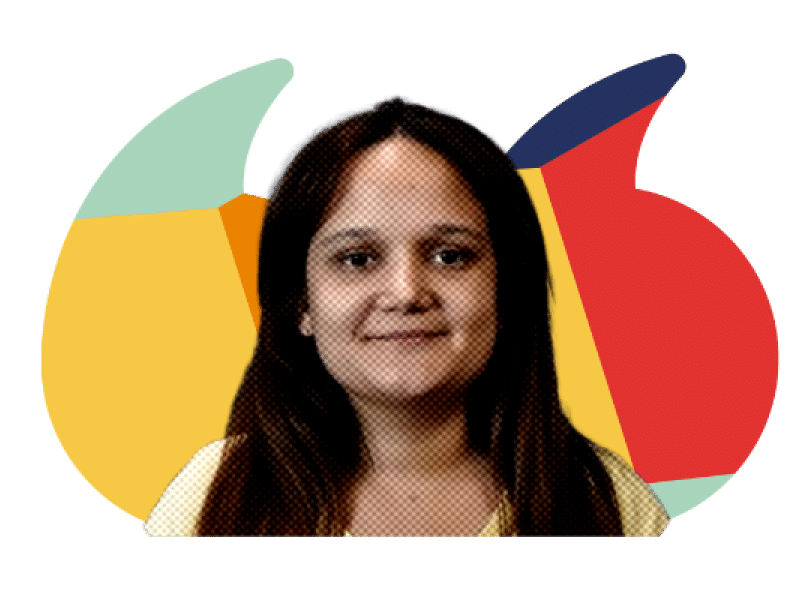
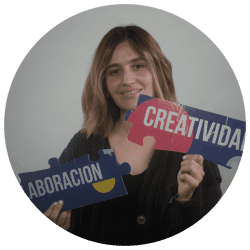
Maria Jose
"I believe that migrants contribute from our life experiences, resilience, and empathy."
Her story
María José, a 28-year-old Venezuelan, has lived in Argentina for seven years. Her migration was exciting, but she also encountered many barriers and challenges related to her hearing loss.
María José's story represents a journey of growth and improvement. She arrived in Argentina from Venezuela seven years ago, full of expectations, and faced obstacles she had never experienced before, especially related to her hearing loss. This journey allowed her to fully explore her identity and understand her disability beyond her diagnosis, finding a sense of belonging in support groups. Her family in Argentina, especially her aunts, connects her to her Venezuelan roots through food, language, and customs, keeping her culture alive.
Working at Inclúyeme has been a turning point for María José, who has learned to embrace her identity as a migrant with a disability. In her role, she contributes to improving the experience of other migrants, hoping that her journey inspires and generates positive change. She dreams of a society that values these contributions, moving together toward greater inclusion.
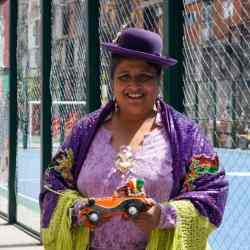
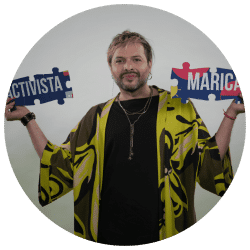
Yuvinka Sejas
Born in Bolivia, she has lived in the Mujica neighborhood for almost 40 years and promotes inclusion and respect for migrants, highlighting their role as creators of a new culture in which their roots are intertwined with those of the host country.
Yuvinka Sejas Camacho's origins reflect her identity as a defender of cultural diversity and a migrant: born in La Paz, Bolivia, she has lived for almost 40 years in the Mujica neighborhood of Buenos Aires.
At first, she faced identity conflicts, feeling torn between her Bolivian nationality and her belonging to the neighborhood, but over time she managed to embrace both.
As a "walking museum in constant motion," Yuvinka promotes inclusion and respect for migrants, highlighting their role as creators of a new culture in which their roots are intertwined with those of the host country.
"I feel that migrants are agents of change, because we mobilize, because we make our culture visible, and we also show ourselves as cultural makers."
Yuvinka Sejas
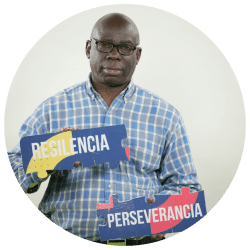
Nestor Briceño
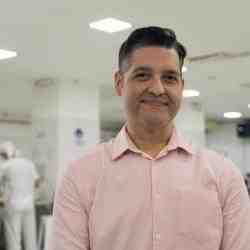
Néstor Briceño, from Venezuela, came to Argentina in search of new opportunities, facing many difficulties finding work. Taking advantage of his skills, he began selling tequeños on the street and built his business, Tequepops.
Néstor Briceño's beginnings reflect his perseverance and capacity for reinvention: born in Maracaibo, Venezuela, and living in Buenos Aires, he founded Tequepops after a long series of job rejections. Needing more income, he began selling tequeños on the street, slowly building a customer base and consolidating his business. Today, Tequepops has a factory and several stores, generating employment and added value.
Néstor also promotes the Chamber of Venezuelan Businessmen and Entrepreneurs in Argentina, a support platform for migrant entrepreneurs. For him, migrating means contributing to and building in the host country, which he hopes will welcome those seeking a better future with respect and empathy.
"It's important that the host place be receptive to migrants, because they can't imagine the pain of leaving your comfort zone, your home."
Nestor Briceño
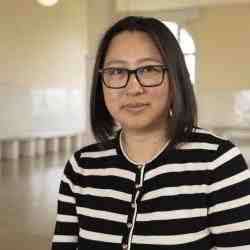
Hu-Hwa Wu (Gabriela Wu)
She arrived in Argentina 40 years ago from Taiwan, and one of the biggest challenges she remembers was the language. She believes in bridging the gap between different communities and is working on a dual immersion project in Spanish and Mandarin, seeking to integrate cultures.
Today, she works on an innovative dual-language immersion project in Spanish and Mandarin at School 28 in Buenos Aires.
Through its work, it seeks to integrate cultures and offer Mandarin Chinese as a life tool for new generations, consolidating its role as a bridge between cultures.
"I always say I was deaf and mute for two years, because I didn't speak and I didn't understand what was happening around me."
Hu-Hwa-Wu (Gabriela Wu)
Manu Mireles
Manu grew up in Venezuela, but found themselves in Argentina. In their new country, they founded the Mocha Celis Civil Association, which provides educational and professional training to trans, transvestite, and non-binary people. "It's a space that embraces, contains, and accompanies," they say.
Manu's origins shed light on the person they would become: their grandmother was a peasant woman who secretly learned to read and, as soon as she could, migrated from the countryside to the city.
Once in Caracas, Manu's family lived in a highly vulnerable and poor neighborhood, so every Christmas their mother was in charge of collecting toys so that no child in the neighborhood would go without a gift.
Both women were a great inspiration to Manu when it came to facing adversity and caring for the community they inhabited. Manu, who holds a bachelor's and master's degree in education, and a doctorate in public policy, puts much of their experience and knowledge to use through non-binary trans activism.
Mocha Celis has employability programs, a popular gender school, and an access to rights area, among other innovative projects. They have also published a documentary, two books, comics, and reports available for free on their website.
"Thinking of ourselves as agents of change means that we have the capacity to transform the world a little."
Manu Mireles
Laura Herrera
Social communicator Laura Herrera arrived in Argentina from Colombia at the age of 29. Her desire to work in the most vulnerable areas led her to join the Jesuit Migrant Service (SJM), first in her home country and then in her country of arrival.
During her time at university, she became involved with communication for social development and dedicated herself to conducting practical work in highly vulnerable areas. She later arrived at SJM and completed a postgraduate degree in education and policy, motivated by working with children and youth.
In her new country, she discovered everything that Colombia represented in her identity, making it easier and more special for her to work with families who migrated from their own countries, sometimes due to the armed conflict.
Through the Soy Refugio initiative, Laura worked with women from all over the world, seeking to create "something collective, with a focus on local integration and income generation."
Migrant women make tote bags, mugs, diaries, and other products that they sell with the guarantee that a migrant woman seeking social and economic integration and independence was involved in their production.
“Being an agent of change means having the responsibility to convey what migrant women want to say.”
Laura Herrera
Nengumbi Sukama
Like many of his fellow Congolese, for Nengumbi Sukama, migration was a matter of survival. The military dictatorship of Joseph-Désiré Mobutu imposed widespread political persecution, which affected Nengumbi's family, as his father was an opposition politician.
Nengumbi studied economics at university, where professors demonstrated how dictator Mobutu was ruining the country and incited students to protest. Coming from a political family, Nengumbi quickly rose to prominence as a political leader and human rights activist.
His father, aware that his family was in danger and that his son had already been arrested three times, advised him to leave the country. "The old man said 'I don't want to lose you,' so you have to go." So Nengumbi arrived in Argentina in 1995.
A year later, he founded the Refugee Forum in Argentina, serving as a mediator between refugees and asylum seekers before the UNHCR and the Argentine authorities. Then, in 2002, from England, he founded the Office of the Ombudsman for Minorities Victims of Racism in Argentina, IARPIDI.
With these initiatives, Nengumbi and his colleagues achieved something very important: government recognition of the existence of structural racism in Argentina.
“To this day, people continue to say, 'There were never any Afro-Colombians in Argentina,' which is a historical lie,” Nengumbi says. “But today, thanks to the work we've done, we've generated a change in the perception and discourse of a sector of the Argentine political and leadership class, especially in human rights associations.”
“Being an agent of change means being committed to changing a reality that affects a sector of society in which you live.”
Nengumbi Sukama
Julieta Casó
Despite being born in Venezuela, Julieta Casó, a sociologist and social psychologist, always felt like a migrant, as her parents are Argentine.
She faced great difficulties, but Julieta worked hard to find work in the field she studied and wanted to use her experience to help Venezuelans who were going through the same thing. That's why she created the Guáramo initiative, to "stay in touch with my profession and contribute something to Venezuela." Liliana Miñán, a social work graduate who was born in Argentina, migrated to Venezuela, and returned to her home country 20 years later, joined the project.
Thus, since its inception, Guáramo has been comprised of people from both countries. The project joined the Alianza por Venezuela job board to analyze the migrant labor market, in an initiative called "Get a Job with Guáramo."
The purpose of this and other innovations is to change the migrant labor culture that preys on jobs with lower wages and working conditions, even though they are overqualified for them. "Work isn't just about earning money; it's essential because we have to support ourselves, but work is a form of personal development," says Casó.
"You're still from the place where you were born, raised, and identify. I think that's the story of migration: you're still you, and you have the ability to choose."