Hello Europe Tour in Italy: Reimagining Migration in Urban Spaces
How cities and young changemakers are reshaping belonging in Europe
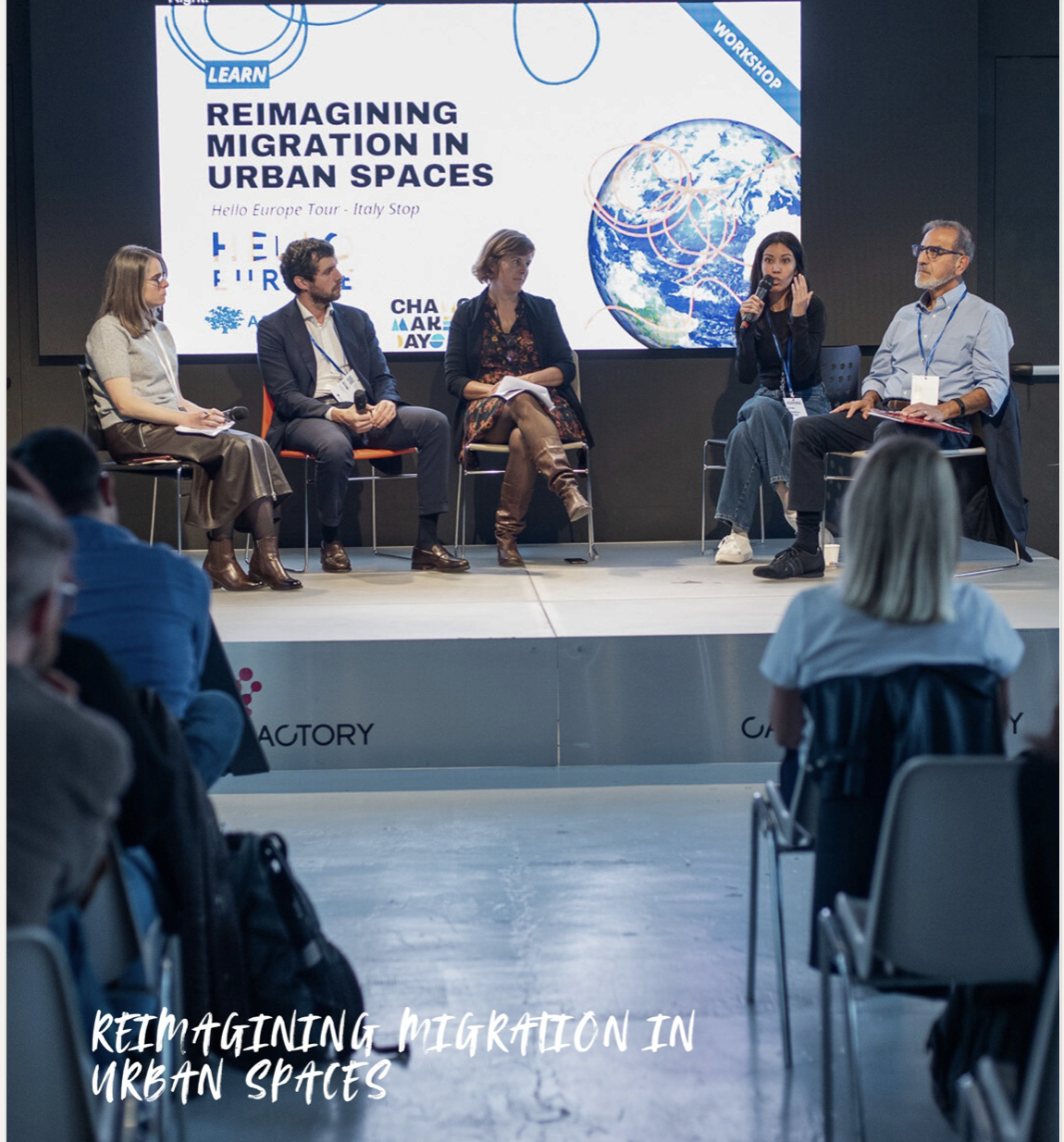
Migration has always been a story of cities. It’s in urban streets, schools, and workplaces where people first meet, where cultures blend, and where belonging is tested and redefined. In Milan, a city where one in five residents is foreign-born, the Hello Europe Tour made its latest stop to explore how cities can become true engines of inclusion, and how young changemakers are leading the way.
Co-hosted by Ashoka Hello Europe, Ashoka Italy, and partners at the Changemaker Days Festival, the event brought together voices from government, philanthropy, education, and civil society to imagine what an inclusive urban future might look like. The panel, moderated by Laura Batalla (Ashoka), featured Antonella Angela Colombo (Municipality of Milan), Alfonso Molina (Ashoka Fellow and founder of Fondazione Mondo Digitale), Stefano Rovelli (The Human Safety Net), Fatima Zahra El Maliani (Compagnia di San Paolo Foundation), as well as Angeliki Petrits (European Commission) and Hello Accelerator participant Ammar Shawesh.
During the same week, the Urban Partnership for the Inclusion of Migrants and Refugees—part of the EU’s Urban Agenda—also held its in-person plenary in the city. Ashoka Hello Europe, as an active member of this Partnership, works alongside cities, national governments, EU institutions, and civil society to co-create practical solutions for inclusion at the local level. This alignment offered a moment to showcase Milan’s local efforts, connect with European peers, and highlight changemaking approaches that complement the Partnership’s mission.
The primary question we asked was, what happens when city leaders, social innovators, and young people come together to rethink migration from the ground up? Here’s what we learned.
Cities as laboratories of shared governance
In Milan, migration policy isn’t only designed for migrants, it’s co-created with them. Antonella Angela Colombo, from the Municipality’s Department of Welfare and Health, described how Milan is pioneering co-programming and co-design processes that bring together over 40 third-sector organizations to shape a new system of reception and inclusion.
This shift marks a deeper paradigm change in public administration: from a “provider–beneficiary” approach to one of shared responsibility. Through joint governance, network managers, and participatory structures, Milan is transforming how cities think about social inclusion. “It’s a work in progress,” Colombo noted, “but one that’s already changing both institutions and communities from within.”
Innovation, collaboration and the human factor
For Alfonso Molina, founder of Fondazione Mondo Digitale and himself a refugee, innovation is not just about technology — it’s about people. “Every migrant and refugee should become a life project,” he shared, explaining his concept of socio-technical constituencies: collaborative systems where digital tools and social support work hand in hand.
From teaching digital literacy through adapted learning materials to pairing migrant learners with Italian students as peer tutors, Molina’s work shows how human connection fuels digital inclusion. It’s a model where innovation means more than efficiency — it means empowerment.
Similarly, Stefano Rovelli from The Human Safety Net highlighted how collaboration across sectors unlocks new possibilities. By mobilizing the local presence of Generali offices across cities worldwide, the foundation helps align community priorities with business resources.
“In Milan, for example, housing is a shared concern — and when we address that, we’re also addressing integration,” Rovelli explained. “Our approach is to work through trust and proximity, building local partnerships that make migration solutions both practical and depoliticized.”
It’s an approach that underscores a key theme of the Hello Europe Tour: multi-stakeholder collaboration is not optional — it’s essential.
Youth and a new map of belonging
When Fatima Zahra El Maliani took the floor, systems change emerged through personal stories. Born in Morocco and raised in Turin’s Porta Palazzo neighborhood, she described how growing up in a so-called “problematic” area shaped her sense of belonging.
“I was always made to feel like a beneficiary — something to fix,” she said. “But at school, I was simply a student, just like everyone else. That was the first space where I felt equal.”
After studying abroad, Fatima returned to her neighborhood to find a youth-led organization supporting dozens of migrant-background students. Her message was clear: change begins when young people see themselves not as recipients, but as protagonists.
Europe needs cities that listen and connect
Angeliki Petrits, from the European Commission and co-coordinator of the Urban Agenda Partnership for the Inclusion of Migrants and Refugees, highlighted how integration remains a multi-level challenge — designed at national levels but lived locally. Through EU networks such as the Urban Agenda Partnership and the European Integration Network, cities are becoming key arenas for experimentation and exchange.
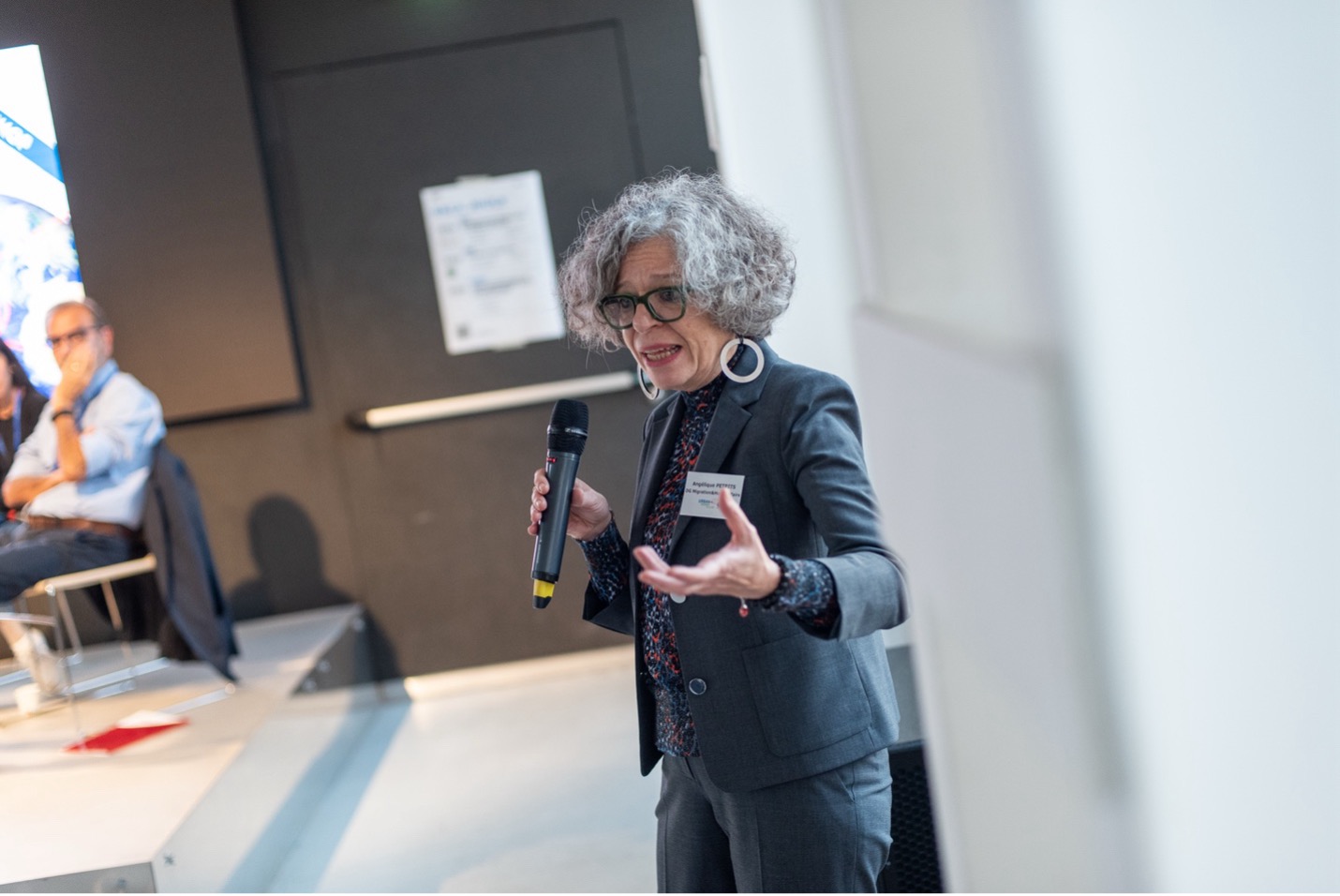
Angeliki Petrits
Integration, she said, depends on four interlinked pillars — education, employment, housing, and health — as well as digital access and gender inclusion. “Cities are where integration happens,” she said, “and where Europe’s values become visible.”
A call from within the movement
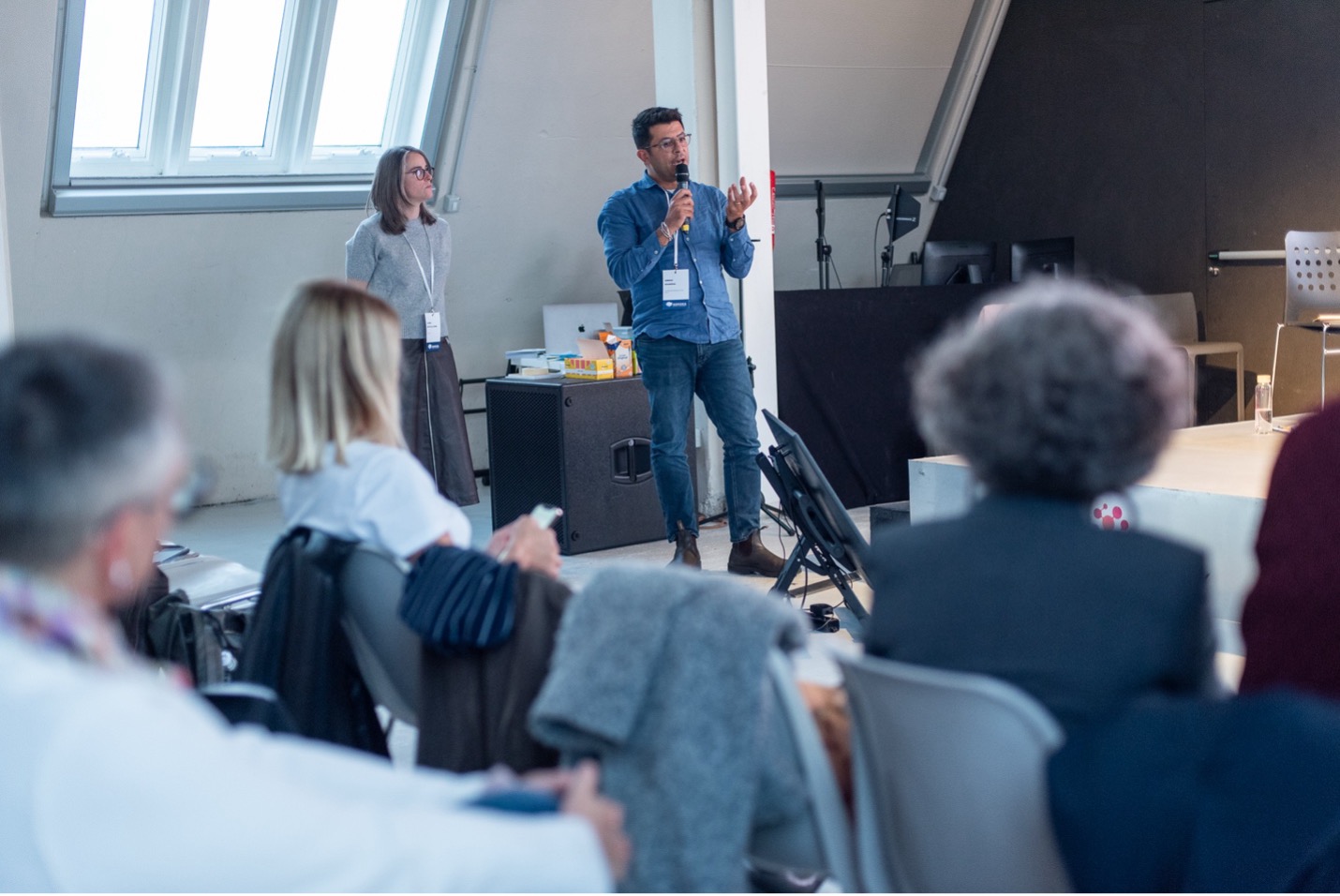
Laura Batalla & Ammar Shawesh
Closing the session, Ammar Shawesh, director of Cooperativa Impresa Sociale Ruah and a participant in the Hello Accelerator on Migration Talent, spoke about his team’s work on infrastructure for collaboration — a prototype aimed at strengthening trust-based partnerships across Europe. “We believe migrants are active changemakers,” he said. “Our goal is to connect local initiatives to a European vision where collaboration becomes the new norm.”
As the discussion ended, each speaker offered a final wish for the future. Fatima’s stood out: “As we keep physically building cities, let’s also make the effort to deconstruct conceptual cities — the invisible walls that separate us. That’s how we unlock lives.”
From Milan’s co-designed systems to youth-led movements of belonging, the Italy stop of the Hello Europe Tour reaffirmed that cities are not just spaces — they are stories of coexistence. And those stories, told by migrants and citizens alike, are what will build Europe’s next chapter.