Five Latin American Social Enterprises with a Positive Impact on Migrants
Originally published in RÍO NEGRO.
In the last decade, migratory movements have occurred more abruptly, and 280 million people worldwide are considered migrants, facing new challenges in an ever-changing context. Since 2015, Ashoka’s Hello World program has been working to shift the perception of migration, understanding people on the move as changemakers—agents of change who want to contribute to their new communities for the common good. When this is recognized and integrated into the design of social inclusion initiatives, their effectiveness and transformative power increase.
“Migration was never (and still isn’t) the problem. We’ve been clear about that from the beginning. The problem was the lack of coordination, innovation, effective public policies, and narratives centered on the receiving societies.”
— Kenny Clewett, Director of Social Entrepreneur Search & Selection at Ashoka Europe and Co-director of Hello World, Ashoka’s global initiative for people on the move.
In the July 2023 report Migration: People on the Move, the Hello World program highlights five social entrepreneurs in Latin America (among others worldwide) who are working to address the challenges migrants face, doing it so in disruptive and transformative ways. Why are these stories worth telling? Hello World operates on the belief that people on the move are changemakers who want to contribute to the well-being of their new communities. Recognizing this has a positive impact when implementing strategies. Therefore, when this reality is acknowledged and integrated into the design of various social initiatives, those initiatives become more effective.
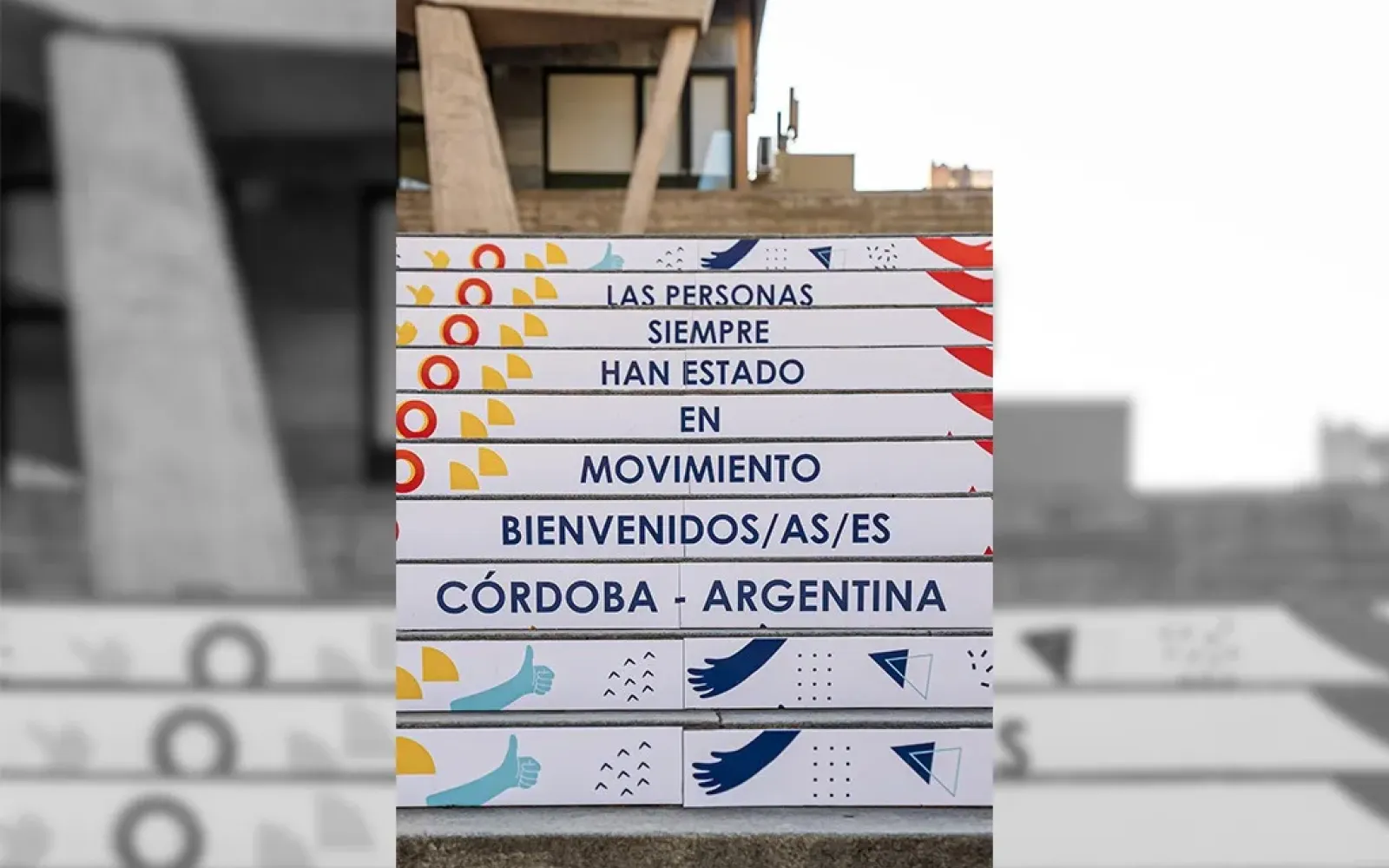
Hello World is active in Latin America—particularly in Argentina, Chile, and Colombia—alongside 16 European countries. They are currently working to expand their operations across the Americas.
From Mexico to Argentina
The five entrepreneurs highlighted share this new vision of migration, though they come from different fields. For example:
- María Teresa Ronderos (Colombia) founded the Centro Latinoamericano de Investigación Periodística (CLIP), which connects journalists working on similar topics so they can share resources and develop more complete stories, especially around sensitive issues. They've uncovered and shared previously untold migration stories in Latin America, such as African migrants’ journeys through the continent and the unique challenges they face.
- Tomás Lawrence (Chile) created Fundación Interpreta, which uses big data to identify and analyze complex issues like migration. The organization provides tools and data to public institutions and other organizations to combat misinformation and develop effective public policies.
- Jonathan Berezovsky, an Argentine entrepreneur, founded Migraflix in Brazil. The organization employs migrants, valuing their culture and customs. In 2022, one of their innovations was the Raíces en la Ciudad culinary culture project. Focused on shifting the narrative around migration in host communities across Latin America—in partnership with Airbnb—Migraflix trained 50 migrants from 20 nationalities to create cultural and gastronomic experiences (like cooking, traditional dances, painting, etc.) in São Paulo. According to Hola América, these experiences increased participants’ income by over 30%.
- Otello Castillo and Marisol Aguilar founded Racismo.MX, a platform dedicated to raising awareness about systemic racism in Mexico. Through podcasts, talent pools, reports, publications, and an observatory—and under the slogan #elracismoexiste—they developed an online “racism meter” so that anyone who has experienced or witnessed racial discrimination can anonymously report and visualize it. The tool also provides statistics and a way to contact the organization.
- Susanne Melde, from the UN’s International Organization for Migration (IOM) in Latin America, is driving innovation from within this international body.
Each entrepreneur brings a unique perspective and structure to their work. Hello World helps connect them with one another and with others to build synergies, identify replicable principles, and amplify their impact.
Hello World encourages moving beyond the traditional view of migrants as passive subjects of pity, fear, or charity. Instead, it calls for seeing people on the move as positive agents of change and for recognizing the value they bring to communities.
Back in 2018, during his TEDxSãoPaulo talk “Somos todos migrantes”, published on Migraflix’s YouTube channel, Jonathan Berezovsky summarized the paradigm shared by these changemakers:
“After working with migrants, I feel empowered—I’m a freer person. I had some internal battles due to my own preconceptions. How did I create those borders, if I was born free? If I was once a free person who lost that childlike soul, I now have to think about how to learn from meeting someone unknown. Every migratory movement can revitalize our community life. They can help us become more tolerant. I’ve learned to make the most of the encounters with the unknown.”
In the same spirit, Clewett reflects:
“Beyond the well-known migration challenges, we aim to solve the framework—how we think about the problem. At best, migrants are often viewed as passive subjects of compassion, pity, or even fear. This must change. We need to see people on the move as positive agents of change—always and everywhere. Human movement brings value at every step to the communities involved. Movement is natural and part of our humanity—we all move at some point—and migrant-led communities are engines of positive social change. We need to understand this, gather the data to prove it, make it visible, and change our narrative.”
Hello World: Impact and Reach
“Our greatest impact comes from supporting organizations that work with migrants, many of them in Latin America—like Nippy Latam, Migraflix, and UMANA,” says Marianny Pacheco, Regional Coordinator for Hello World in Latin America. A political scientist with a master’s in public management, she’s a 35-year-old Venezuelan migrant living in Buenos Aires for the past six years.
Hello Europe began in 2016, backed by Ashoka and other partners, in response to mass migration into Europe and inadequate reception systems. In 2020, Ashoka launched similar programs in Argentina (Hola Argentina), later expanding to Chile and Colombia under the name Hola América. A year later, these efforts were consolidated globally under Hello World.
The impact of Hello World operates on three levels: broadly, deeply, and strategically:
- Broad reach: by providing visibility and support to changemakers and social innovators in migration, identifying over 500 solutions across Europe and Latin America. The program runs 15 solution accelerators in 18 countries, supporting the growth of more than 100 social initiatives.
- Deep impact: through backing standout social entrepreneurs like Tomás Lawrence in Chile, who uses advanced technology and AI to address migration challenges. It also works through ecosystem accelerators that bring together social entrepreneurs: policymakers, business leaders, researchers, and people with migrant backgrounds to collaboratively tackle specific migration issues.
- Strategic communication: working with the media and political leaders to promote innovative and effective migration policies.
Hello World is currently active in Latin America—especially Argentina, Chile, and Colombia—and in 16 European countries. Clewett explains:
“This year, we plan to expand operations throughout the Americas—from south to north, including Mexico and the United States, where migration plays a crucial role. We also aim to activate Ashoka’s networks in Africa and Arab states to address migration from those perspectives, leveraging Ashoka’s presence in over 80 countries. As more countries get involved, our understanding of migration deepens.”
Their most recent Impact Report offers detailed insights into the program’s reach. A related video illustrates the journey.
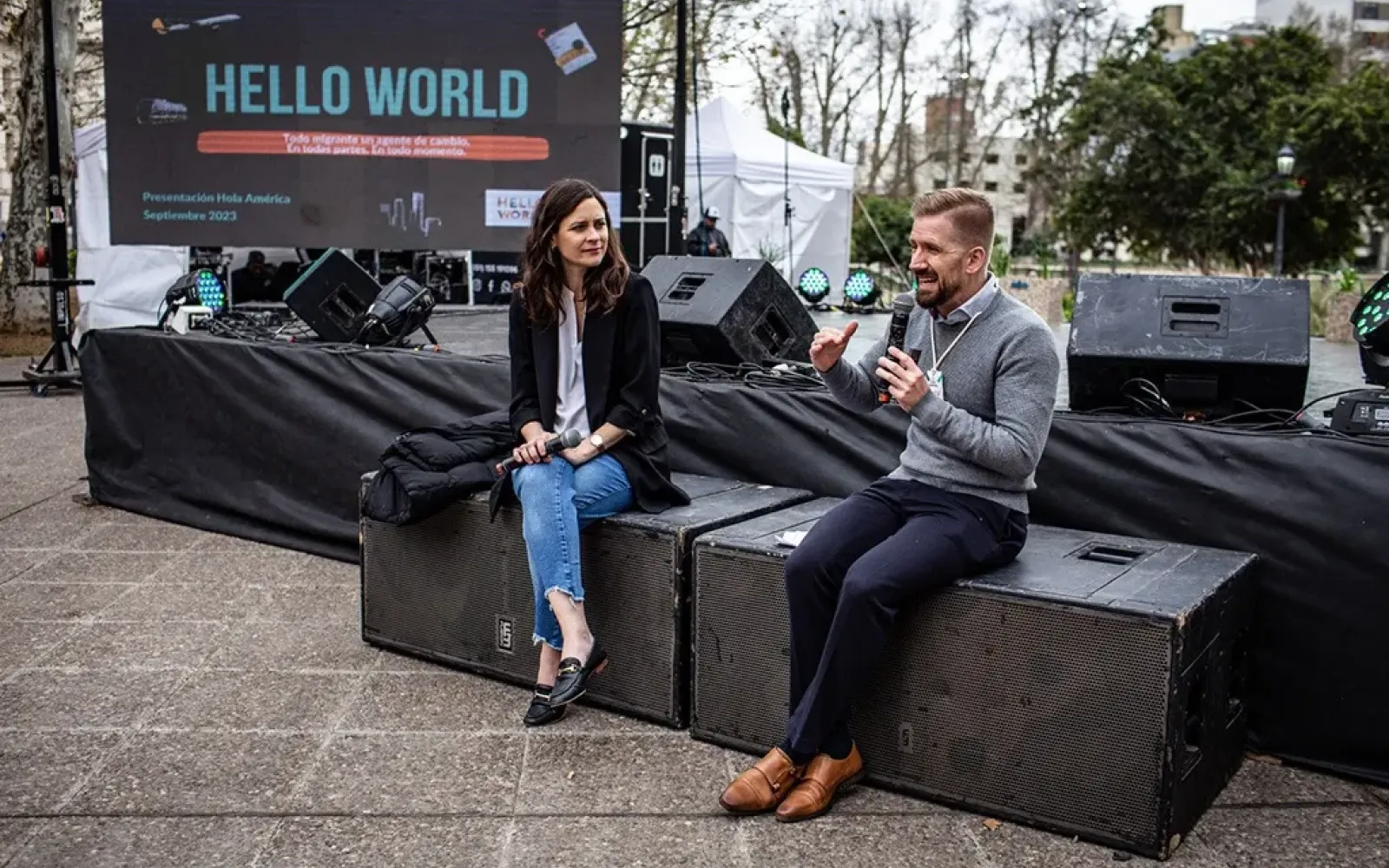
Kenny Clewett is Director of Social Entrepreneurship at Ashoka Europe and Co-Director of Hello World: Ashoka's global initiative for refugees and migrants. "Migration isn't a problem. The problem was a lack of coordination, innovation, effective public policies, and reality-based narratives," he says. (Image courtesy of Ashoka)
This model is designed to be replicable, not only by Ashoka but by others. Every new methodology they develop is documented, systematized, and shared. For example, their accelerator launch guides are available in the Tools section of the Hello Europe website. This allows them to partner with organizations interested in implementing or adapting parts of the program to their needs.
Beyond direct impact, the program observes a shift in language across sectors: people are beginning to talk about solutions, changemakers, and the importance of collaboration with migrants.
“That’s important,” Clewett notes, “but we also want to see this translate into action—like policy changes, increased resources for migrant social entrepreneurs and innovation, and more public or corporate support for communities that want to welcome migrants in innovative ways.”
The program also sees impact in practical areas, like making it easier for migrant-led businesses to access funding, or helping them create representative networks to liaise with government agencies.
One of Hello World’s broader goals is to help international bodies, local governments, and institutions develop their own social innovation labs on migration. Clewett adds:
“To truly change something, we need solutions that are bigger than the problems. And that means everyone has to be involved.”
Challenges and responses
Ashoka is a nonprofit organization funded by private donations—from foundations, individuals, and corporations. Hello World, as part of Ashoka, operates under a similar model.
The program identifies several challenges in the sector: lack of innovation, outdated public policy models, inefficient reception systems rooted in paternalism, and poor coordination between stakeholders. To address these, the program fosters innovation, facilitates dialogue between successful initiatives, and builds collective responses.
“Migration affects everyone, truly. That’s why our work necessarily involves actors from all sectors. It’s the only way to bring about real, global change,” says Clewett.
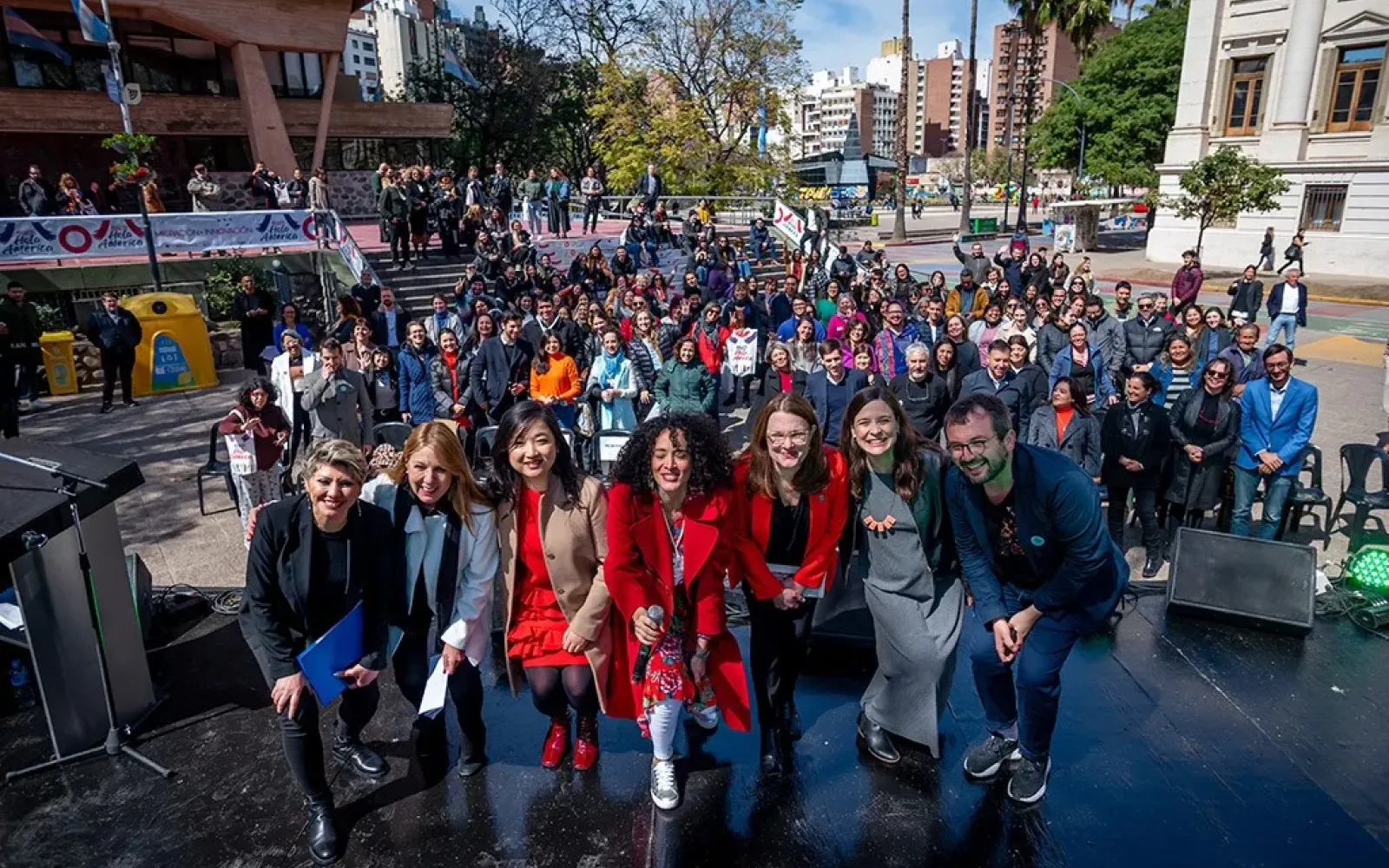
For example, the latest Hola América Festival in Córdoba, Argentina brought together local governments, international entities, partners, entrepreneurs, migrants, business leaders, and other global changemakers. It was designed to create the cross-sectoral synergies urgently needed.
Looking ahead, it’s clear people will keep moving. As Clewett quotes Somali-British poet Warsan Shire:
“No one puts their children in a boat unless the water is safer than the land.”
“There are growing circumstances that drive people to move—often extreme ones. We can’t keep pretending migration can be stopped using ineffective, dehumanizing strategies like border militarization, human rights violations, or scarcity narratives that fuel social conflict,” Clewett concludes.
This program aims to embrace the reality of movement as part of life and a basic human drive. It seeks to shift thinking—to understand that those who move have invested their lives and savings in search of something better.
“And they always bring innovation and entrepreneurship. That’s what happens when people move. That’s why we highlight the solutions emerging—not only from migrants creating for the common good, but also from the communities that welcome them, which are improved when everyone gets involved,” Clewett says in closing.
You can read the article in Spanish, originally published on RÍO NEGRO.